BEGIN:VCALENDAR
VERSION:2.0
PRODID:-//18.83.4.138//NONSGML kigkonsult.se iCalcreator 2.20//
CALSCALE:GREGORIAN
METHOD:PUBLISH
X-WR-CALNAME:Oceans at MIT
X-WR-CALDESC:Striving to understand\, harness and sustain Earth'\;s def
ining frontier.
X-FROM-URL:http://oceans.mit.edu
X-WR-TIMEZONE:America/New_York
BEGIN:VTIMEZONE
TZID:America/New_York
X-LIC-LOCATION:America/New_York
BEGIN:STANDARD
DTSTART:20171105T020000
TZOFFSETFROM:-0400
TZOFFSETTO:-0500
RDATE:20181104T020000
TZNAME:EST
END:STANDARD
BEGIN:DAYLIGHT
DTSTART:20180311T020000
TZOFFSETFROM:-0500
TZOFFSETTO:-0400
TZNAME:EDT
END:DAYLIGHT
END:VTIMEZONE
BEGIN:VEVENT
UID:ai1ec-824612@oceans.mit.edu
DTSTAMP:20180503T082852Z
CATEGORIES;LANGUAGE=en-US:Special Events
CONTACT:http://www.neaq.org/learn/lectures/upcoming-lectures/
DESCRIPTION:Speakers: \nRobert Vincent\, Ph.D.\, Massachusetts Institute of
Technology\, Sea Grant College Program\nRose M. Martin\, Ph.D.\, Oak Ridg
e Institute for Science and Education\, Postdoctoral Researcher at EPA Atl
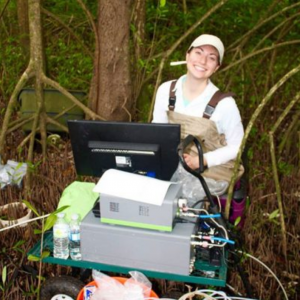
antic Ecology Division\n\n\nThe MIT Sea Grant College Program and the U.S.
Environmental Protection Agency have been working with the National Park
Service to study carbon cycling in coastal dune habitats\, as well as the
effects of historic peat deposits on the establishment and persistence of
invasive plants (Phragmites australis). With the increased risk of erosion
from coastal storms exposing the once-buried peat deposits\, and the chal
lenge of controlling an aggressive invasive species\, this dynamic system
faces an uncertain future. The research findings from this study will info
rm future conservation efforts in the region as well as provide a deeper u
nderstanding of carbon cycling in coastal dunes.\n\nInformation here. Regi
stration is required.\nTickets: http://support.neaq.org/site/Calendar?id=1
07028&view=Detail.
DTSTART;TZID=America/New_York:20170330T190000
DTEND;TZID=America/New_York:20170330T210000
GEO:+42.359131;-71.049581
LOCATION:Simons IMAX Theatre @ 1 Central Wharf\, Boston\, MA 02110\, USA
SEQUENCE:0
SUMMARY:New England Aquarium Lecture: Invasive Species and Carbon Cycling i
n Coastal Dunes of Cape Cod
URL:http://oceans.mit.edu/event/new-england-aquarium-lecture-invasive-speci
es-and-carbon-cycling-in-coastal-dunes-of-cape-cod
X-COST-TYPE:external
X-WP-IMAGES-URL:thumbnail\;http://oceans.mit.edu/wp-content/uploads/2017/03
/Screen-Shot-2017-03-15-at-2.35.23-PM-150x150.png\;150\;150\;1\,medium\;ht
tp://oceans.mit.edu/wp-content/uploads/2017/03/Screen-Shot-2017-03-15-at-2
.35.23-PM-300x300.png\;300\;300\;1\,large\;http://oceans.mit.edu/wp-conten
t/uploads/2017/03/Screen-Shot-2017-03-15-at-2.35.23-PM.png\;604\;606\;\,fu
ll\;http://oceans.mit.edu/wp-content/uploads/2017/03/Screen-Shot-2017-03-1
5-at-2.35.23-PM.png\;794\;796\;
X-ALT-DESC;FMTTYPE=text/html:\\n\\n\\n\\n\\nSpeakers:
\nRobert Vincent\, Ph.D.\, Ma
ssachusetts Institute of Technology\, Sea Grant College Program\nRose M. Martin\, Ph.D.\, Oak Ridge Ins
titute for Science and Education\, Postdoctoral Researcher at EPA Atlantic
Ecology Division
\n\n\nThe MIT Sea Grant College Program an
d the U.S. Environmental Protection Agency have been working with the Nati
onal Park Service to study carbon cycling in coastal dune habitats\, as we
ll as the effects of historic peat deposits on the establishment and persi
stence of invasive plants (Phragmites australis). With the increase
d risk of erosion from coastal storms exposing the once-buried peat deposi
ts\, and the challenge of controlling an aggressive invasive species\, thi
s dynamic system faces an uncertain future. The research findings from thi
s study will inform future conservation efforts in the region as well as p
rovide a deeper understanding of carbon cycling in coastal dunes.\n\n\nTickets: http://s
upport.neaq.org/site/Calendar?id=107028&view=Detail.
X-TAGS;LANGUAGE=en-US:lecture\,new england aquarium
X-TICKETS-URL:http://support.neaq.org/site/Calendar?id=107028&view=Detail
END:VEVENT
END:VCALENDAR